“I am always ready to learn, although I do not always like being taught.”
—Winston Churchill
“A remarkable, glorious achievement is just what a long series of unremarkable, unglorious tasks looks like from far away.”
—Tim Urban
“It is both nature and nurture, not in opposition but influencing each other reciprocally as their boundaries blur. How a person interacts with that world of opportunities and constraints drives the life that unfolds.”
—Walter Mischel
“Whatever you can do, or dream you can do, begin it. Boldness has genius, power, and magic in it!”
—Johann Wolfgang von Goethe
“I believe that every right implies a responsibility, every opportunity, an obligation, every possession, a duty.”
—John D. Rockefeller, Jr.
“What’s life, after all, but a series of problems? And your life is defined by how you handle them.”
—Dr. Drew Pinsky
“Vanity as an impulse has without a doubt been of far more benefit to civilization than modesty has ever been.”
—William Woodward
“Thought seems essentially to be a reaching out of ourselves to connect with something else.”
—Eric Kaplan, paraphrasing the words of Parmenides
“Language is a means of getting and idea from my brain into yours without surgery.
—Mark Amidon
“You can never achieve happiness by making the world conform to your desires. But you can master your desires and habits of thought.”
—Jonathan Haidt
“The hours from 7 to 12 are your time to build for the future before the world descends on you.”
—Tyler Cowen
“With everything you do, in fact, you should train yourself to question your repeated behaviors.”
—Dan Airely
“I had learned a basic truth about human nature, that the stress and strain of relationships can change us beyond recognition, blurring the lines between kindness and cruelty, loyalty and betrayal, love and hate. The great goal in life is to understand and forgive each other and ourselves.”
—John Lithgow
“Most of us make at least three important decisions in our lives: where to live, what to do, and with whom to do it.”
—Daniel Gilbert
“He who desires but acts not breeds pestilence.”
—William Blake
“Every man is like the company he is won’t to keep.”
—Euripides
Proverbs 50, “A man is known by the company he keeps.”
“Procrastination is the thief of time.”
—Edward Young
“Continued success at anything tends to breed arrogance, if you’re not careful.”
—Isaac Asimov
“You should work to reduce your biases, but to say you have none is a sign that you have many. To state your beliefs up front – to say ‘Here’s where I’m coming from’ -is a way to operate in good faith and to recognize that you perceive reality through a subjective filter.”
—Nate Silver
“To be ignorant of what occurred before you were born is to always remain a child. For what is the worth of human life unless it is woven into the life of our ancestors by the records of history.”
—Cicero
“Laws are silent in time of war.”
—Cicero
“They should remember that both in war and in peace, reinforcing failure through obstinacy has always tended to turn a crisis into a catastrophe.”
—Antony Beever
“Vast ills have followed a belief in certainty.”
—Kenneth Arrow
“Cicero once wrote that to be completely free one must become a slave to a set of laws. In other words, accepting limitations is liberating.”
—Mihaly Csikszentmihalyi
“Commitment to a goal and to the rules it entails is much easier when the choices are few and clear.”
—Mihaly Csikszentmihalyi
“Take sides. Neutrality helps the oppressor, never the victim. Silence encourages the tormentor, never the tormented.”
—Elie Wiesel
“You decide who you’re going to be by the accumulation of decisions you make about where you focus your time and effort.”
—Tucker Max
“The things you think about determine the quality of your mind. Your soul takes on the color of your thoughts.”
—Marcus Aurelius
“Any theory can be squared with the evidence, given sufficient ingenuity.”
—Stephen Law
“To illustrate a principal you must exaggerate much and you must omit much.”
—Walter Bagehot
“Second guessing yourself is much harder than second guessing other people.”
—Christopher Nolan
“You get paid by doing or making something people want, and those who make more money are often simply better at doing what people want.”
—Paul Graham
“Argue with idiots and you become an idiot.”
—Paul Graham
“People respond to incentives.”
—Freakonomics
“A wonderful fact to reflect upon, that every human creature is constituted to be that profound secret and mystery to every other.”
—Charles Dickens
“It is a melancholy truth that even great men have their poor relations.”
—Charles Dickens
“I have indeed lectured to all my nearest and dearest on the necessity of doing what you have agreed to do with good grace and a smile. The trouble is I am one of that common breed of human being who finds it very easy to strew noble little homilies far and wide but considerably less easy to follow those homilies myself.”
—Isaac Asimov
“For every complex human problem there is a solution which is simple, straightforward, and wrong.”
—H.L. Mencken
“Whoever cannot seek the unforeseen sees nothing, for the known way is an impasse.”
—Heraclitus
“Action conquers fear.”
—Peter Zarlenga
“Since the general civilization of mankind, I believe there are more instances of the abridgement of the freedom of the people, by gradual and silent encroachments of those in power, than by violent and sudden usurpations.”
—James Madison
The opposite of love is apathy, the opposite of apathy is curiosity. Therefore, curiosity is love.
—Tim Thayne
“We all know that art is not truth. Art is a lie that makes us realize truth.”
—Pablo Picasso
When you counsel someone, you should appear to be reminding him of something he has forgotten, not of the light he was unable to see. It is the stars who teach us this subtlety.”
—Baltasar Gracián
“It is absurd to divide people into good and bad. People are either charming or tedious.”
—Oscar Wilde
“I do not choose to be a common man…it is my right to be uncommon — if I can…I seek opportunity- -not security…I want to take the calculated risk; to dream and to build, to fail and to succeed… to refuse to barter incentive for a dole…I prefer the challenges of life to the guaranteed existence, the thrill of fulfillment to the stale calm of utopias….”
—Peter O’Toole
“I am satisfied with the mystery of life’s eternity and with a knowledge, a sense, of the marvelous structure of existence—as well as the humble attempt to understand even a tiny portion of the Reason that manifest itself in nature.”
—Albert Einstein
“Prosperity is not without many fears and distastes, and adversity is not without comforts and hopes.”
—Francis Bacon
“Be not angry that you cannot make others as you wish them to be, since you cannot make yourself as you wish to be.”
—Thomas Kempis
“The human brain really, really likes to simplify things. History provides the context of our world and our lives, because each of us is a character in this grand story—and the last thing we want to believe is that the story is too complicated and mysterious for us to understand.”
—Tim Urban
“When written in Chinese, the word crisis is composed of two characters. One represents danger and the other represents opportunity.”
—JFK
“A human being should be able to change a diaper, plan an invasion, butcher a hog, conn a ship, design a building, write a sonnet, balance accounts, build a wall, set a bone, comfort the dying, take orders, give orders, cooperate, act alone, solve equations, analyze a new problem, pitch manure, program a computer, cook a tasty meal, fight efficiently, die gallantly. Specialization is for insects.”
—Robert A. Heinlein
“We can’t all do everything.”
—Virgil
“No one is smart enough to figure out anything worthwhile from scratch.”
—Steven Pinker
“Reality is that which when you stop believing in it, it doesn’t go away.”
—Philip K. Dick
[When asked why he wanted to climb Mount Everest] “Because it’s there.”
—George Leigh Mallory
“Man is so made that he can only find relaxation from one kind of labor by taking up another.”
—Anatole France
“A basic failing of lazy people: they have to work too hard or they won’t do anything at all.”
—Orson Welles
“Lay hold of today’s task, and you will not need to depend so much upon tomorrow’s. While we are postponing, life speeds by. Nothing is ours, except time.”
—Seneca
“What man can you show me who places any value on his time, who reckons the worth of each day, who understands that he is dying daily? For we are mistaken when we look forward to death; the major portion of death has already passed. Whatever years lie behind us are in death’s hands.”
—Seneca
“The meek shall inherit the earth, but not the mineral rights.”
—J. Paul Getty
“A man is not idle because he is absorbed in thought. There is a visible labor and there is an invisible labor.”
—Victor Hugo
“Saying ‘I could do that, but I won’t’ is just another way of saying that you can’t.”
—Richard Feynman
“Excuses are easy lies we tell ourselves to cover up our failures.”
—James Altucher
“Pain is a good thing. If you’re having pain in your life, it means that your body, your mind, your soul is telling you that something is wrong. Physical pain is telling you there’s something wrong with your foot. Mental pain is telling you there’s something wrong with your life.”
—Robert Greene
“We become conscious of problems when we explicitly identify and articulate them.”
—Michael Starbird
“Success is not about always almost succeeding. How would you feel if you were failing about 60% of the time? Sounds like a solid ‘F’. Well, in certain contexts you’d be a superstar. A major league baseball player who failed 60% of the time—that is, who had a batting average of .400—would be phenomenal.”
—Michael Starbird
“If you care about what other people say, you’re doomed. Because they’re never satisfied, they won’t be happy until they drag you down into the hole they’re in.”
—Bob Lefsetz
“It’s a desperate thing to need everybody to be really happy with everything you say.”
—Louis CK
“We should keep a careful diary of our moments of envy: they are the covert guides to what we should try to do next.”
—Alain de Botton
“There’s no such thing as work-life balance. Everything worth fighting for unbalances your life.”
—Alain de Botton
“Compatibility is an achievement of love, not a precondition.”
—Alain de Botton
“The only people we can still think of as normal are those we don’t yet know very well.”
—Alain de Botton
“The hunger for status, like all appetites, can have its uses: spurring us to do justice to our talents, encouraging excellence, restraining us from harmful eccentricities and cementing members of our society around a common value system.”
—Alain de Botton
“It is one of the disasters of the modern age that our new unparalleled access to information has come at the price of our capacity to concentrate on anything much. The deep, immersive thinking which produced many of civilization’s most important achievements has come under unprecedented assault. We are almost never far from a machine that guarantees a mesmerizing and libidinous escape from reality.”
—Alain de Botton
“We all possess wisdom that we lack the strength to properly enact in our lives.”
—Alain de Botton
Greek word Akrasia: to know what we should do combined with a persistent reluctance to actually do it.
“To be a good human is to have a kind of openness to the world, an ability to trust uncertain things beyond your own control, that can lead you to be shattered in very extreme circumstances for which you were not to blame. That says something very important about the ethical life: that it is based on a trust in the uncertainty, and on a willingness to be exposed. It’s based on being more like a plant than a jewel: something rather fragile, but whose very particular beauty is inseparable from that fragility.”
—Martha Nussbaum
“What is wisdom but the passage from denial of reality to acceptance?”
—Steven Pressfield
“When somebody persuades me that I am wrong, I change my mind. What do you do?”
—John Maynard Keynes
“Problems worthy of attack prove their worth by hitting back.”
—Piet Hein
“Nothing in the world is more common than unsuccessful people with talent—leave the house before you find something worth staying for.”
—Banksy
“If you can fill the unforgiving minute
With sixty seconds’ worth of distance run,
Yours is the Earth and everything that’s in it…”
—Rudyard Kipling
“The world in our heads is not a precise replica of reality; our expectations about the frequency of events are distorted by the prevalence and emotional intensity of the messages to which we are exposed.”
—Daniel Kahneman
“The emotional tale wags the rational dog.”
—Jonathan Haidt
“Few things are as destructive and limiting as a worldview that assumes people are mostly rational.”
—Scott Adams
“When dealing with people, let us remember we are not dealing with creatures of logic. WE are dealing with creatures of emotion, creatures bristling with prejudices and motivated by pride and vanity.”
—Dale Carnegie
“If you tell me how you get your feeling of importance, I’ll tell you what you are. That determines your character. That is the most significant thing about you.”
—Dale Carnegie
“We would not be here if humanity were inherently evil. We’d have eaten ourselves alive a long time ago.”
—Patton Oswalt
“Despite an unbroken tradition of violence and war, man is not by nature a killer.”
-Dave Grossman
“‘Because it used to work’ is not a sensible reason to keep doing something.”
—Seth Godin
“He could not live because all man’s aspirations, all his impulses to life, are only a striving for greater freedom. Wealth and poverty, fame and obscurity, power and subjection, strength and weakness, health and disease, culture and ignorance, work and leisure, repletion and hunger, virtue and vice, are only greater or lesser degrees of freedom.”
—Leo Tolstoy
“You are not alone. We are all the same, all in this fragile skin, suffering the ugliness of simply being human, all prey to the same mortal dreads.”
—Harlan Ellison
“Human history is a brief spot in space, and its first lesson is modesty.”
—Will and Ariel Durant
“Nothing is clearer in history than the adoption by successful rebels of the methods they were accustomed to condemn in the forces they disposed.”
—Will and Ariel Durant
“Too many people do too well out of today’s system to make change easy.”
—The Economist
“Roughly speaking, losing something makes you twice as miserable as gaining the same thing makes you happy.”
—Richard Thaler
“The learning of life is about what to avoid.”
—Nassim Nicholas Taleb
“Never ask a doctor what you should do, ask him what he would do if he were you.”
—Nassim Nicholas Taleb
“Do those things that incline you toward the big questions, and avoid the things that would reduce you and make you trivial.”
—George Saunders
“What doesn’t transmit light creates its own darkness.”
—Marcus Aurelius
“I’ve picked up on the fact that success in life begins itself internally and manifests itself externally.”
—Ryan Holiday
“When you are 80 years old, and in a quiet moment of reflection narrating for only yourself the most personal version of your life story, the telling that will be most compact and meaningful will be the series of choices that you have made. In the end, we are our choices.”
—Jeff Bezos
“Unlimited possibilities are not suited to man; if they existed, his life would only dissolve in the boundless. To become strong, a man’s life needs the limitations ordained by duty and voluntarily accepted.”
—I Ching
“When opportunities are unlimited, there is an inevitable depreciation of the present.”
—Eric Hoffer
“There’s so much we don’t want to do but if we just put one foot in front of the other we discover unforeseen rewards.”
—Bob Lefsetz
“We are like mayflies in the cosmos. What does a mayfly know of a change of seasons or change of years? These are unfathomably long timescales to the lifespan of a mayfly.”
—Neil DeGrasse Tyson
“Success hinges less on getting everything right than on how you handle getting things wrong. This is where creativity, passion, and perseverance come into play. In a flat world, you don’t make people powerful by pushing them to be perfect but by allowing them to become passionate about something that compels their interest.”
—Hara Estroff Marano
“This is why we’re here. To fight through the pain and, when possible, to relieve the pain of others. So simple. So hard to see.”
—Andre Agassi
“This is the only perfection there is, the perfection of helping others. This is the only thing we can do that has any lasting value or meaning. This is why we’re here. To make each other feel safe.”
—Andre Agassi
“Even a brilliant mind is only as good as the material—the input—fed into it.”
—Robert Caro
“The one universal constant in all of your failed endeavors is you.”
—The Last Psychiatrist
“Creating the impression of truth displaces the search for truth.”
—Robert Jackall
“The major limitation of any learning environment or learning experience is that you get out of it only what you put into it. Learning doesn’t take place magically.”
—John Robb
“There is often a monstrous incongruity between the hopes, however noble and tender, and the action which follows them.”
—Eric Hoffer
“If you don’t write your own rules someone else will, and the results won’t be pleasant.”
—James Altucher
“Tomorrow is the most important thing in life. It comes into us at midnight very clean. It’s perfect when it arrives and it puts itself into our hands. It hopes we’ve learned something from yesterday.”
—John Wayne
“Do what you say you’re going to do. There’s a discipline in following through with your word which I think is one of the most important disciplines you will ever learn.”
—J.J. French


 before this day came.
 , a look at the various ways the chronic headaches manifest themselves. As a lifelong sufferer of migraines, hearing other people’s stories brought me comfort (not to mention, A LOT of people have them MUCH worse than I do!).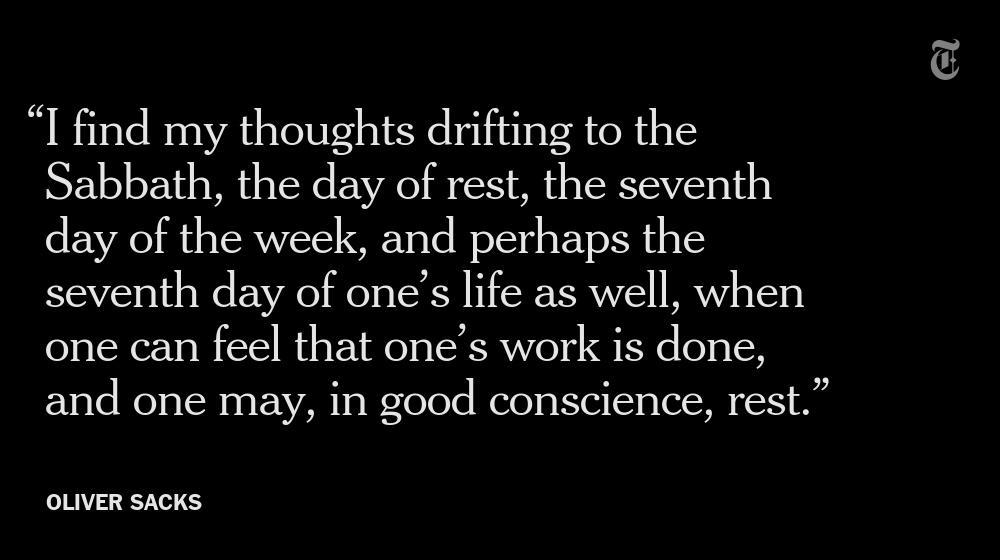


 to learn about ancient Greece and philosophy.
 to learn about ancient Rome, religion and celebrity.
 to learn about medieval France and to ponder what it means to live a good life.
 and
and  to learn about the American Revolution and the ideas and events our founded The United States.
 ,
,  , and
, and  to learn of the brutality of slavery;
  , and
, and  to find out about the Civil Rights Movement.
 ,
,  , and
, and  to learn about the origins of modern industry and finance.
 to learn about Victorian society and the power of ideas.
 to find out about United Fruit, shipping and commerce.
 and what it means to be evil.
 because he’s a hilarious badass and mobilized the English language for war.
 and
and  to understand why New York City is such a clusterfuck. More lastingly, you’ll learn something about the mechanics of politics and what it takes to get stuff done.
 and
and  to get a grip on the personal computing industry.


 ,
,  , and
, and  that are effective at engaging the reader, and placing the figure in a historical context that elucidates why they story is still relevant.He does just this with Charles Darwin, the eminent Victorian naturalist.


 The Siding Spring